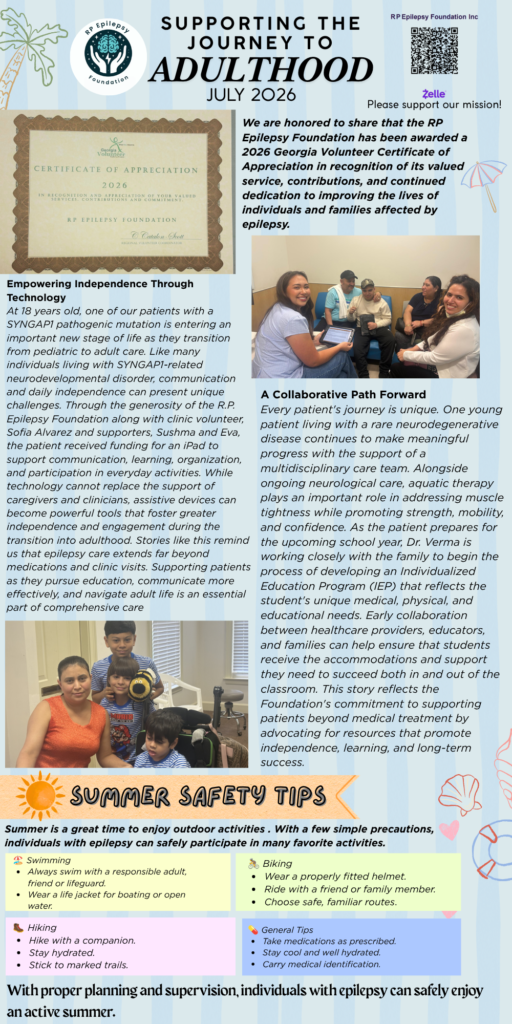
Navigating the transition from pediatric to adult care can be a monumental phase of life. Moreover, for Adulthood, Epilepsy, it is especially challenging for those with complex neurological conditions. In their July 2026 update, the RP Epilepsy Foundation shared inspiring stories, recognition, and practical tips. The tips focus on empowering independence and fostering safety during this critical journey.
Here are the key takeaways from this month’s newsletter:
🏆 Celebrating a Meaningful Achievement
The RP Epilepsy Foundation announced that they have been awarded a 2026 Georgia Volunteer Certificate of Appreciation. This honor recognizes the foundation’s valued service, continued dedication, and impactful contributions toward improving the lives of individuals and families affected by epilepsy.
📱 Empowering Independence Through Technology
For individuals living with a SYNGAPI pathogenic mutation or related neurodevelopmental disorders, daily independence presents unique hurdles.
The newsletter highlights an 18-year-old patient who recently transitioned to adult care.
Thanks to generosity of the foundation alongside clinic volunteers, the patient received funding for an iPad to assist with communication.
It supports learning, organization, and daily activities.
However, assistive technology doesn’t replace human care, but it serves as a powerful tool to foster greater engagement and independence during Adulthood, Epilepsy.
🤝 A Collaborative Path Forward
Every patient’s journey requires unique, multidisciplinary care. The newsletter spotlighted a young patient with a rare neurodegenerative disease who is making meaningful progress through a combination of neurological care and aquatic therapy to address muscle tightness and build confidence. As the upcoming school year approaches, the family is working closely with Dr. Verma to develop an Individualized Education Program (IEP) to ensure the student receives the exact medical, physical, and educational accommodations they need to succeed.
☀️ Summer Safety Tips
To ensure individuals with epilepsy can safely enjoy outdoor activities, the foundation shared several practical safety guidelines:
- 🏊 Swimming: Always swim with a responsible adult, friend, or lifeguard. Wear a life jacket for boating or open water.
- 🚴 Biking: Wear a properly fitted helmet, ride with a companion, and choose familiar, safe routes.
- 🥾 Hiking: Hike with a companion, stay hydrated, and stick strictly to marked trails.
- 📋 General Tips: Take all medications exactly as prescribed, stay cool, and always carry medical identification.
With the right planning, collaboration, and community support, individuals living with epilepsy can safely navigate milestones and enjoy an active lifestyle.